
Resources
Blog
Insights on events, technology, and the future of gathering
Latest articles
Insights on events, technology, and the future of gathering
Quick answer: The future of event gamification is immersive, personalized and adaptive. Augmented reality, virtual reality and artificial intelligence will let challenges, rewards and storylines respond to each attendee in real time - across in-person and virtual audiences - while wearables and data analytics extend gamified engagement before, during and after the event.
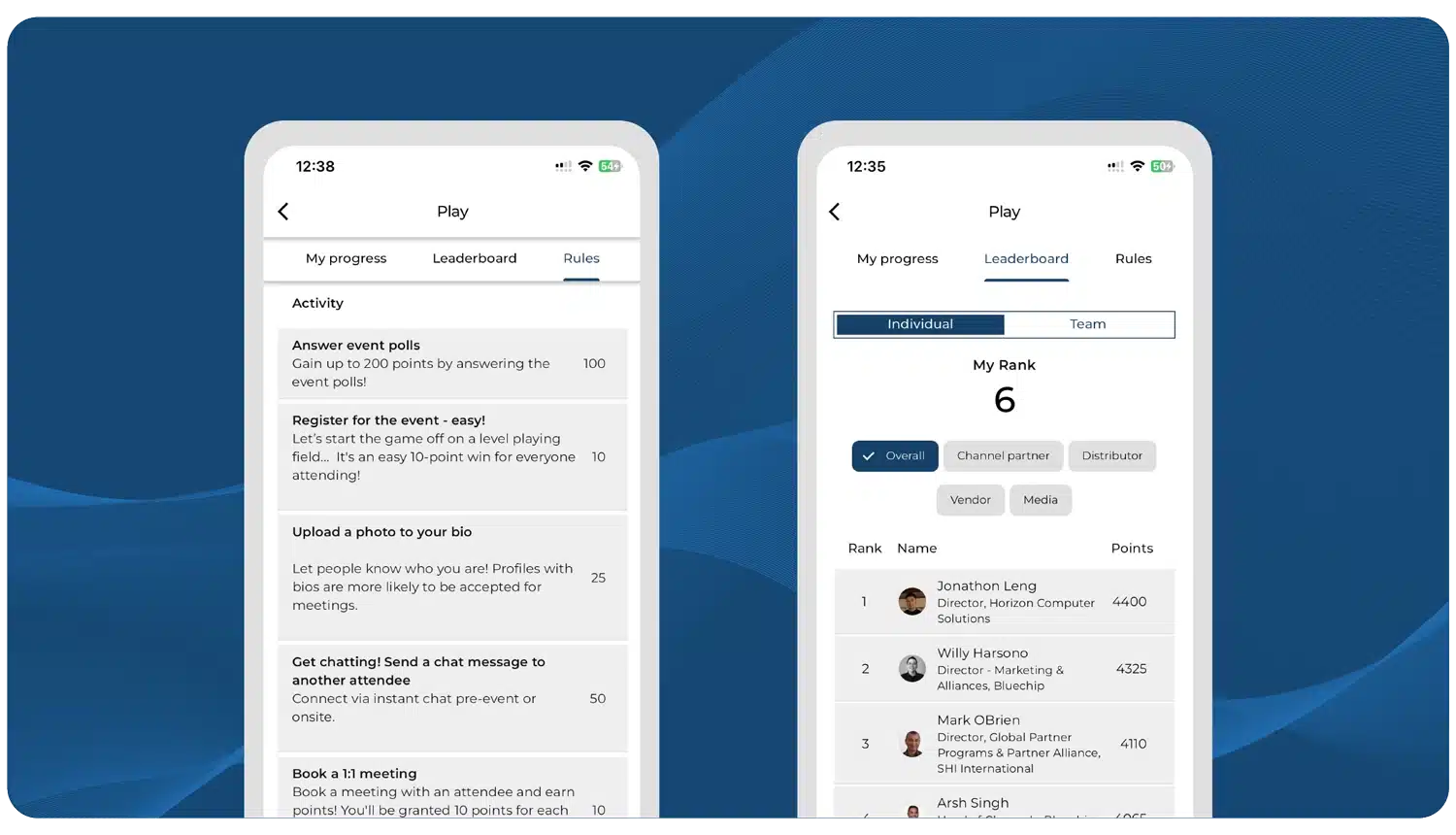
Gamification adds points, leaderboards and rewards to make events more engaging
Expect deeper immersion, wider accessibility and adaptive challenges
Gamification turns passive attendees into active participants
Organizers can prepare now with hybrid, wearable and always-on strategies
Event gamification is the use of game mechanics - points, leaderboards, challenges and rewards - to make in-person, virtual and hybrid events more fun and engaging. Its appeal is rooted in psychology: our brains release dopamine when we anticipate rewards, creating a sense of accomplishment that goes beyond winning points or prizes. The result is a unique, memorable experience for everyone involved.
Three technologies are shaping the next generation of gamified events: augmented reality, virtual reality and artificial intelligence.
AR blends virtual elements with the real world, powering activities like scavenger hunts and interactive venue maps. Looking ahead, holographic displays and more capable AR glasses point to a future where virtual and physical elements coexist seamlessly at events.
VR transports participants into immersive environments for simulations and collaborative games. As headsets become more affordable and user friendly, expect VR to be used for virtual networking, product demonstrations and even complete virtual conferences that foster a real sense of community.
AI personalizes gamification based on user behavior and preferences. Future applications include real-time adaptation of challenges and dynamic storylines that make gamified scenarios more responsive and lifelike.

Expect gamified experiences that are more immersive, more accessible and more responsive to each individual attendee. Seven predictions stand out:
AR, VR and AI will raise immersion levels with more realistic simulations and interactive storylines. Challenges will respond dynamically to attendees’ actions, making events more captivating and memorable.
As AR glasses, VR headsets and AI-driven applications become more affordable, gamified experiences will be democratized - opening the door to more inclusive and diverse participation.
AR overlays, VR simulations and AI-driven interactions that respond to participants’ physical surroundings will create a more cohesive, integrated event experience.
Predictive analytics and machine learning will enable real-time adjustments to challenges and rewards, giving each attendee a sense of individual connection and relevance.
Social VR and collaborative gamification scenarios will become more common. Attendees - onsite or remote - will meet in shared virtual spaces that foster teamwork, communication and community.
AI integration will produce robust analytics, giving organizers valuable insights for continuous optimization of their gamification strategies based on real participant behavior.
Gamification will extend well beyond traditional events: education, healthcare and professional training are all likely to adopt gamified experiences for immersive learning and skill development.
Gamification boosts attendee engagement by turning passive attendees into active participants. Challenges and interactive elements spark social interaction, while game mechanics make educational content more enjoyable - improving learning and retention.

Earning rewards is a strong motivator, and real-time feedback lets organizers adapt and optimize the event dynamically. As hybrid formats become the norm, gamification needs to include both physical and virtual attendees - with wearables and pre- and post-event challenges keeping engagement alive well beyond the event itself.
Because attendees have diverse preferences, and generic one-size-fits-all challenges no longer cut it. Personalized gamification uses attendee data to customize challenges, rewards and content to individual interests.
Data analytics and machine learning make this practical: organizers can analyze behaviors, preferences and engagement levels, while AI-driven adaptive strategies adjust the experience in real time. If a participant favors specific kinds of challenges, the system offers more of them.
The trade-off is ethical. Organizers must balance personalization with privacy - being transparent about how data is used to uphold participant trust and comply with regulations such as GDPR.
Start with the strategies below - gamification is accessible and cost-effective with a gamification app for events like Canapii.
Keep abreast of advances in AR, VR and AI, and integrate them where they genuinely enhance the experience - think holographic displays, immersive VR scenarios and AI-driven personalization.
Use analytics and machine learning to understand participant preferences, behaviors and engagement patterns, then tailor challenges, rewards and interactive elements accordingly.
Build experiences that connect on-site and remote attendees, fostering community and collaboration. This inclusive approach maximizes engagement across diverse event formats.
Implement systems that adjust challenges and interactions in real time based on attendee behavior, using AI algorithms that continuously learn and optimize each participant’s journey.
Wearables let attendees interact with gamified elements, track progress and join challenges hands-free - an immersive addition to the gamification toolkit.
Introduce gamified elements in the lead-up to the event and keep them running afterward. Sustaining interest across pre-event and post-event phases supports the whole event lifecycle.
Create challenges that encourage teamwork, communication and shared experiences. Social interaction enriches the event atmosphere and makes the environment more communal.
Be transparent about how participant data is collected, used and stored for gamification, and secure proper consent. Upholding ethical standards builds trust and keeps you compliant with privacy regulations.
The use of game mechanics - points, leaderboards, challenges and rewards - at in-person, virtual or hybrid events to make them more interactive, engaging and memorable.
Augmented reality, virtual reality and artificial intelligence. AR blends digital elements into the venue, VR creates immersive shared spaces, and AI adapts challenges and rewards to each attendee in real time.
Yes. Game mechanics translate naturally online, and well-designed hybrid gamification connects on-site and remote attendees in the same challenges and leaderboards.
AI analyzes attendee behavior, preferences and engagement levels to adjust challenges, rewards and content in real time - so each participant gets more of what keeps them engaged.
Be transparent about what data is collected and how it is used, obtain consent, and balance personalization against privacy obligations under regulations such as GDPR.
Canapii’s built-in gamification tools - points, leaderboards and rewards - have helped power 2,000+ events in 45+ countries. Speak to our team today to see what gamification could do for your next event.