
Resources
Blog
Insights on events, technology, and the future of gathering
Latest articles
Insights on events, technology, and the future of gathering
Quick answer: The most popular types of virtual events are virtual conferences and summits, hybrid events, webinars and e-learning, online trade shows and exhibitions, workshops, product launches, live streaming, virtual networking, career and job fairs, and podcasts. Each format helps organizers reach wider audiences at lower cost, with dedicated event software keeping attendees engaged.
Virtual events have earned a permanent place in the marketer's toolkit. They remove the barriers of travel and venue capacity while giving organizers new ways to engage audiences and measure results. Below is a closer look at the most effective types of virtual events and how Canapii's event platform supports each one.
A virtual event is any organized gathering that attendees join online rather than in person, from a one-hour webinar to a multi-day conference. Sessions are delivered through streaming and event software, and interaction happens through live chat, Q&A, polls, and networking tools. Canapii has powered 2,000+ events for 300,000+ attendees across 45+ countries, spanning every format on this list.
Hybrid events combine the best of both worlds: attendees choose whether to take part in person or through virtual technology. A hybrid approach takes extra thought, planning, and tools, so organizers should look for hybrid event software that keeps the virtual audience engaged while simultaneously catering to in-person attendees.
Touted as the original virtual event, webinars and e-learning formats were popular long before events moved online, and they have arguably only become more effective. A purpose-built webinar platform makes it easy to present information, take questions from the audience, and keep attendees engaged with polls and other interactive content. What's more, Canapii's webinar software can record the event and make it available for on-demand replay.
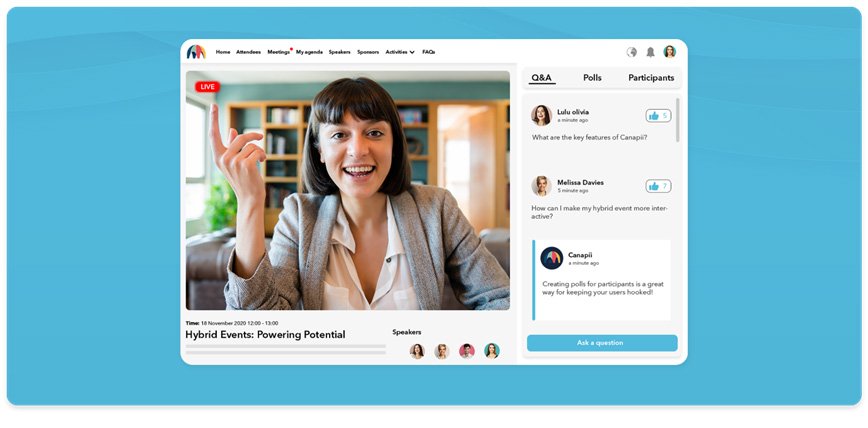
Online trade shows and exhibitions may seem an unlikely fit for a screen, but they keep growing in popularity. Because the goal of any trade show is to generate leads and make connections, the virtual format suits the occasion: visitors can quickly share information with vendors and companies, bookmark their favorites, and join live chats without fighting a crowd.
Event networking platforms like Canapii support these goals through customization and ready-made tools, such as integrated registration, networking features, and post-event analytics for hosts and vendors.
Workshops rely heavily on audience engagement, and they are shifting to digital as a way to reduce costs and planning time. As with webinars, workshop hosts keep their virtual attendees engaged through interactive content, Q&As, polls, and more.
Product launches typically depend on crowd hype and synergy, and virtual event software gives product companies a far wider platform for the big reveal. Brands can live stream the event on their own channels alongside any media outlets, and attendees can share their thoughts and reactions in a live feed similar to social media - a feat that isn't easily replicated in person.
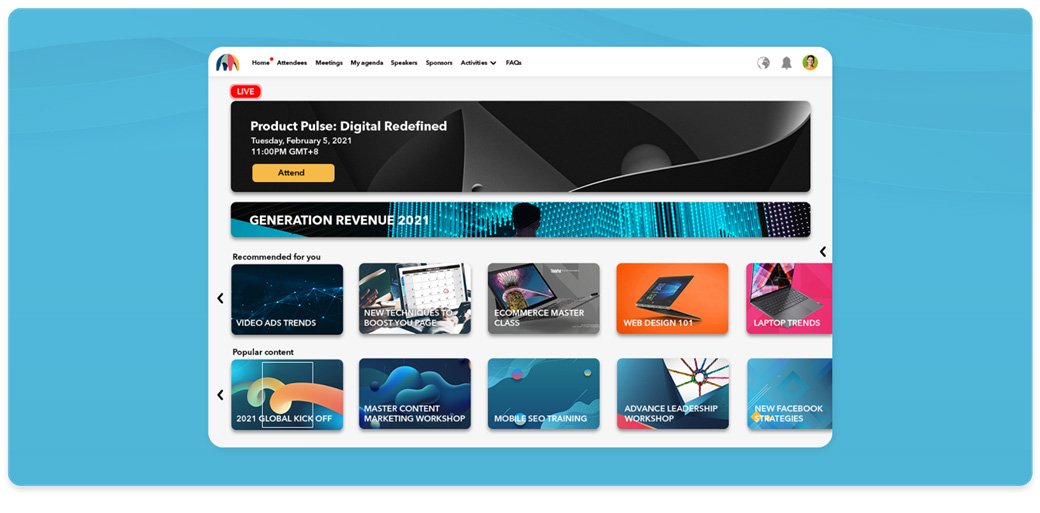
Live streaming sits at the intersection of virtual and hybrid events. With the right platform you can stream an entire event for viewers to watch and take part in real time, then keep working the recording afterwards: pick out the best moments for a recap video, turn sessions into snippets to maximize your content marketing, and share highlights to generate interest in next year's sessions.
Canapii offers a live event streaming platform that bridges the hybrid and virtual event worlds, with end-to-end event management, powerful tools, and analytics that make it easy to stretch your event content further.
Networking remains one of the most important parts of event marketing, and every event should be run or attended with lead generation at the forefront. While many marketers excel at networking in person, virtual networking takes a different approach.
A good event platform like Canapii makes virtual networking more effective. It feels natural and fluid when attendees are actively engaged and know how to make the most of their virtual tools: intuitive interfaces and thoughtfully designed networking features give attendees and session hosts alike the chance to capitalize on an active audience.
The job-seeking process is a long road, but virtual career and job fairs help ease the journey. Attendees can connect with recruiters, land interviews on the spot, and share digital copies of their resumes without leaving home.
Until recently, podcasts were largely an audio-only experience. Virtual event software has changed that, letting podcasters add a visual twist to their content. Episodes remain on demand, so your podcast reaches audiences in a different format with very little extra work required.
A virtual event is any organized gathering that attendees join online instead of in person, from a single webinar to a multi-day conference delivered through streaming, live chat, and networking tools.
Virtual conferences and summits, hybrid events, webinars and e-learning, online trade shows and exhibitions, workshops, product launches, live streaming, virtual networking, career and job fairs, and podcasts.
A virtual event takes place entirely online, while a hybrid event runs an in-person and a virtual experience at the same time, so every attendee can choose how to join.
An event platform that covers registration, live streaming, engagement tools such as Q&A and polls, networking, and analytics - for example, Canapii, which is ISO 27001 certified and backed by 24/7 support.
Whichever virtual event type you run next, Canapii helps you maximize every opportunity from registration to replay: get a demo.