
Resources
Blog
Insights on events, technology, and the future of gathering
Latest articles
Insights on events, technology, and the future of gathering
Quick answer: To run a successful virtual event, do find creative ways to engage your audience, do choose your platform carefully, and do sell sponsorships even without a physical exhibit hall. Don’t assume a virtual event takes less planning time than an in-person one - the logistics differ, but the preparation is just as demanding.
The COVID-19 pandemic turned many in-person event planners into virtual event planners overnight. Whether you chose to host a virtual event or it was a change you weren’t expecting to make, virtual event planning is a skill that develops over time - and it helps to start with tips from the experts. Follow these dos and don’ts to make your next virtual event a success.
Audience engagement is a key goal at any conference or event, but it is more challenging in a virtual setting. People are naturally less engaged when they are not in the same room as the speaker, and you have no control over distractions in each attendee’s environment, like kids or pets. Get creative and find ways to get the audience involved in sessions and presentations: build in activities, run live polls throughout, or play a trivia game about each session’s content.
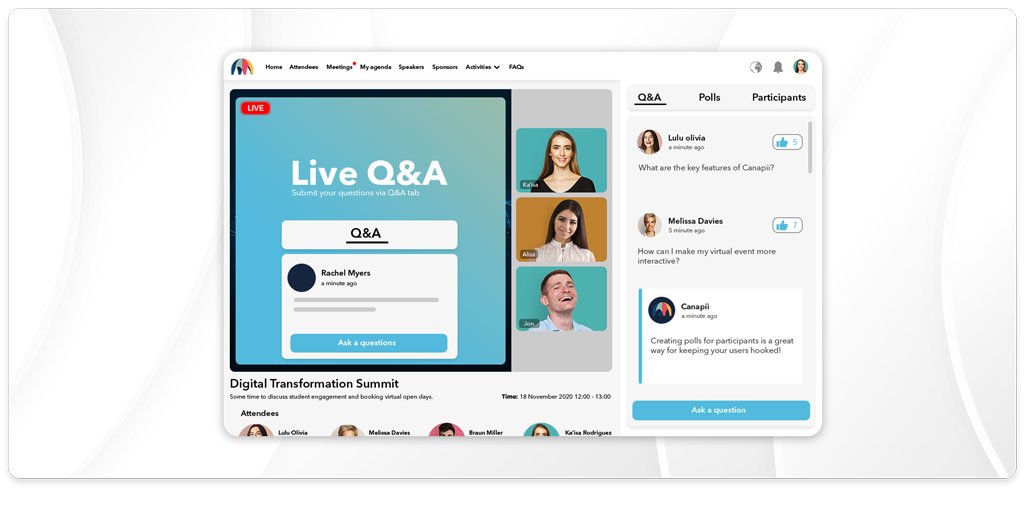
You may not have a traditional exhibit hall, but don’t assume you can’t bring in revenue from exhibitors. There are plenty of ways to sell sponsorships and partnerships: set up a virtual exhibit hall with breakout rooms for each exhibitor, or sell ad placements in informational packets. Either way, find a way to make your event a financial success.
There are many virtual event hosting platforms out there, and they are not all created equal. Each one has different capabilities, like hosting multiple concurrent presentations in the same event, offering breakout rooms, or establishing a centralized virtual exhibit hall. Do your research and compare your options against the type of event you are hosting and the capabilities and features you want to have. Reliability matters too: Canapii has powered 2,000+ events for 300,000+ attendees across 45+ countries, with 99.9% uptime and 24/7 support.
This is a common mistake. Organizers used to coordinating the logistics of a physical venue often assume they can throw together a virtual event in half the time. The logistics may be different with a virtual event, but it still takes extensive time to organize. You need plenty of time to schedule and sign contracts with speakers, get the proper technical equipment and set it up correctly, promote your event to attendees, create a schedule, and advertise and sell sponsorship opportunities.
No. The logistics are different, but a virtual event still needs extensive lead time to book and contract speakers, set up the technology, promote the event, build the schedule, and sell sponsorships.
Build participation into every session: run live polls, take questions throughout, add interactive activities, and play trivia games about the content. Purpose-built engagement tools make this far easier than a plain video call.
Yes. Set up a virtual exhibit hall with a breakout room for each exhibitor, sell branded ad placements in event materials, and package sponsorships around the reach of your virtual audience.
Compare platforms against the type of event you are running and the features you need, such as concurrent sessions, breakout rooms, a virtual exhibit hall, and engagement tools - and check the provider’s reliability and support before you commit.
If you have a virtual event on the horizon, it can be just as successful and productive as any in-person event - as long as you plan appropriately. See how Canapii’s virtual event platform puts these dos and don’ts into practice: get a demo.