
Resources
Blog
Insights on events, technology, and the future of gathering
Latest articles
Insights on events, technology, and the future of gathering
Quick answer: To organize a virtual conference, define your target audience, choose a platform that handles registration, content delivery, and analytics, plan a varied agenda with breaks, prepare your speakers, build in engagement tools like polls and chat, promote the event about two months ahead, and review the data afterward to improve your next one.
Beyond selecting a virtual conference platform to handle the logistics, a lot goes into organizing an online event. Consider this your virtual conference planning guide - each step below builds on the last, from defining who you want in the audience to measuring how it all went.
It’s a simple question: who do you want to attend your virtual conference
The most successful events are usually the most targeted. Your audience will impact everything from the speakers you enlist to the content you share. It affects the tone and style of your event, your marketing, and ultimately the leads you will generate.
Simply put, you want a great fit between your event topics and attendees. Work backwards: think about the purpose of your event and what you want to happen, then start thinking about the type of people you need to attract and the interests they share.
Building out event personas can be a useful exercise here. Write down the average attendee’s pain points, challenges, characteristics, and other details, then try to target people just like your persona.
Choosing a virtual conference platform will be one of the most important planning decisions you make. The right platform enables everything you want to do during your event, and it collects the data and analytics that help you calculate ROI and build on your successes. Here are the criteria to weigh when comparing platforms:
Your event platform is responsible for delivering content to your attendees. You need to know ahead of time what this delivery will look like: will it be easy for the event host, speakers, and end users? Do you have a variety of options, such as live sessions, on-demand downloads, chat rooms, and interactive features?
Truthfully, you might not have these answers ahead of time. Choosing a platform that can do it all gives you the flexibility to make these decisions later.
Ideally, you should be able to facilitate all aspects of your event through one platform, including the registration process. Again, look at this through the eyes of both the event host and the end user.
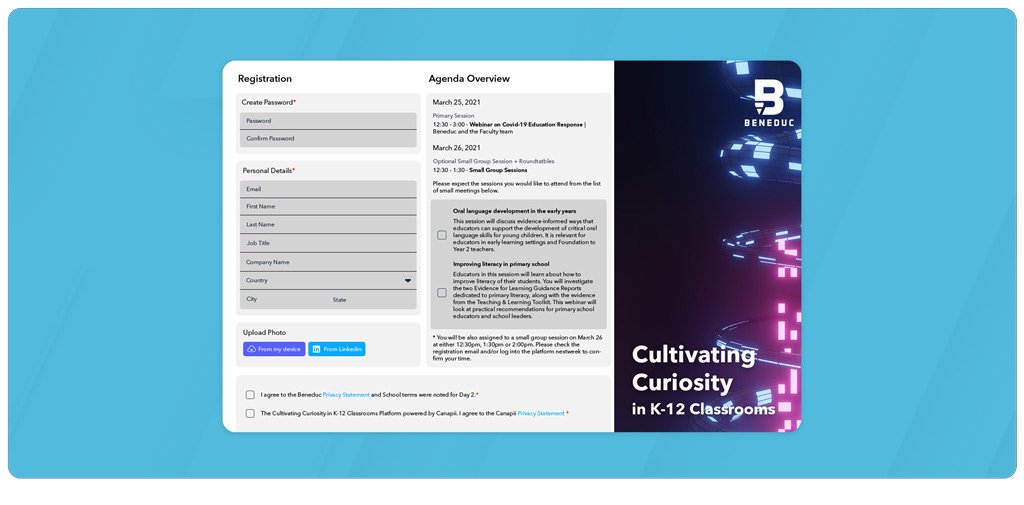
Managing your attendee list can be challenging, especially if you have limited capacity. You may also want to track each attendee’s activities during the event so you can easily find your most engaged leads.
Do you need your event management platform to integrate with another app you’re using, like Slack or your CRM? Each virtual platform may offer different integrations, so never assume compatibility.
Even though your event is virtual, you can still secure sponsorships to help offset the cost. Some event planning software includes sponsorship features, such as brand exposure and marketplaces.
Every virtual event needs an agenda - not just for the host’s sake, but so attendees can maximize their time. Agendas set the right expectations for all guests and keep your event on track.
Treat your virtual event much like an in-person one. No one wants to sit at their desk and drill into session after session, so plan breaks between speakers and infuse enough variety - speakers, workshops, panels - into the day to keep your audience engaged.
If you are hosting an event filled with pre-recorded sessions, you might even opt for a choose-your-own agenda approach. Let attendees decide the order of the sessions so they get the most from their time.
Preparing your agenda ties directly into choosing and prepping your speakers. They need to know what kind of presentation they are giving - a panel, workshop, or lecture - and how to deliver their content through your virtual conference platform.
Once you know how they are going to present, you can offer tips to set them up for success.
Audience engagement is critical to your event’s success and usually requires multiple approaches. For instance, you might include live chat rooms, breakout rooms, interactive polls, and gamification techniques to encourage participation.
One of the benefits of using a virtual conference platform is the ability to track your event analytics. See which features participants are actually using so you can drive better engagement at future events.
Spreading the word about your event is key to increasing attendance. You not only need to choose the right channels to promote it, but also give yourself enough time to collect sign-ups.
Most experts recommend starting marketing about two months before the event. Send invites via email, promote on social media and your own website, and consider partnering with clients or industry influencers to expand your reach.
How did things go? Your platform’s event analytics and reporting should offer insights into sign-ups, engagement, and other key activities so you can see what worked well and what to improve. Then get ready to do it all over again - bigger and better than the last event.
Look at how it distributes content (live, on-demand, chat rooms, interactive features), whether it handles registration and attendee management, which apps it integrates with, and whether it supports sponsorships and analytics. A platform that covers all of these gives you flexibility as your plans evolve.
Yes. An agenda sets expectations, keeps the event on track, and helps attendees maximize their time. Build in breaks between speakers and vary the formats; for pre-recorded events, a choose-your-own agenda lets attendees pick their own session order.
Use multiple approaches at once: live chat rooms, breakout rooms, interactive polls, and gamification. Then check your event analytics to see which features participants actually use, and lean into those at future events.
Most experts recommend starting about two months before the event. Promote via email invites, social media, and your own website, and consider partnering with clients or industry influencers to widen your reach.
Yes. Sponsorships help offset costs even when the event is fully online. Look for a platform with built-in sponsorship features, such as brand exposure and virtual marketplaces.
Canapii has powered 2,000+ events across 45+ countries since 2020, and our team is dedicated to your virtual conference’s success. Schedule a demo of our virtual conference platform today.