
Resources
Blog
Insights on events, technology, and the future of gathering
Latest articles
Quick answer: The most popular icebreakers for virtual events include guess the name, two truths and a lie, trivia, home tours, virtual backgrounds, and a champagne toast. The best choice depends on your audience: consider group size, time zones, cultural background, and how comfortable attendees are with the technology.
Icebreakers have been a staple of corporate events for decades. They help people get to know each other in a fun, friendly way while taking the pressure off leaders and attendees alike. But hosting a virtual event or hybrid event brings some unique considerations. Below we cover how to choose the right icebreaker, then share ten favorites to get your event off to a rousing start.
A good icebreaker makes everyone feel included. Before you pick one, weigh these five factors for your virtual or hybrid event.
With hybrid or virtual events, your attendees may be spread across several states, or even several countries. Where people come from can affect how well an icebreaker is received and understood.
Different time zones can affect icebreakers, too. Someone who woke up early for your event might not be ready for something physical or thought-provoking.
Cultural differences can impact participation. Steer clear of anything that might seem like cultural appropriation or otherwise cause offense.
Some icebreakers are better suited to small groups, while others are ideal for large audiences. Keep engagement in mind: everyone should be able to take part.
Even on a purpose-built online event platform, not everyone will be technically confident. Do not assume every attendee can engage with the tools you are using, and keep instructions simple.
Guess the name is a quick guessing game built around historical or famous figures. Attendees try to guess who the person is based on clues, behaviours, or characteristics.
Two truths and a lie asks one person to share three statements about themselves: two true, one false. The audience guesses which one is the lie, and the first person to get it right goes into the hot seat next.
Tell me more lets attendees go several layers deep about themselves. Start with a map of a country or region, ask one person to mark where they live or come from, then have them share something about that place and something about themselves.
Travel tales works like tell me more but focuses on the city, state, or country where the event is taking place. Attendees mark all the places they have been on the map, earning a point for each one, and the winner shares their own travel tale with the group.
Trivia is ideally suited to virtual platforms, especially with a large group. Use the engagement tools within your event platform to post trivia questions and let everyone choose an answer. You can even break the audience up into teams.
With so many people joining from home, why not invite volunteers to give a quick home tour? It offers a unique glimpse into someone else's life and helps others get to know them on a different level.
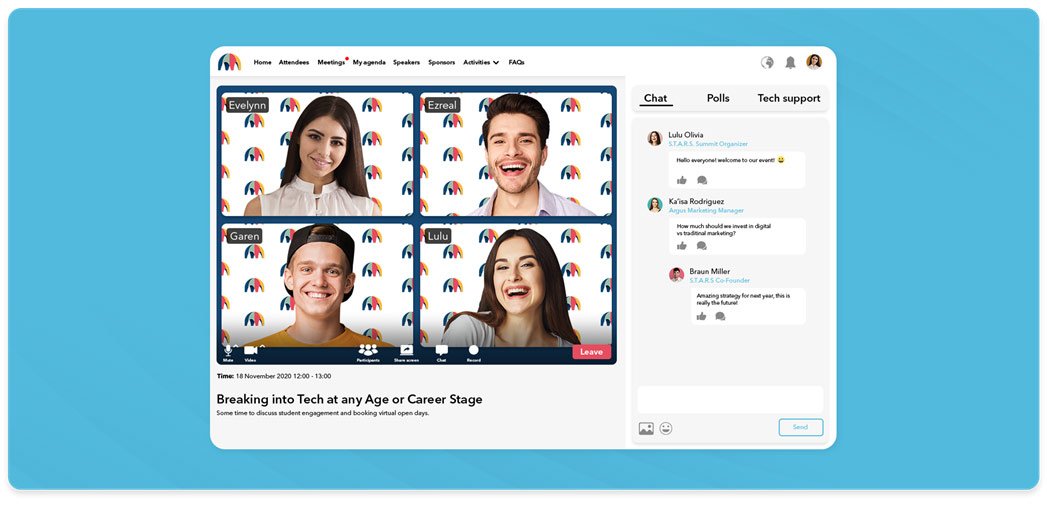
Virtual meeting platforms typically offer a range of virtual backgrounds, and remote attendees often use them to protect the privacy of others at home. Turn it into a game where people explain why they chose their background, or run a challenge for the funniest or most creative one.
Time machine starts with a simple question: if you had a time machine, where would you go and why? The answers can reveal a lot about your audience's preferences and wishes.
For attendees with pets at home, home zoo is a great way to ooh and ahh over everyone's fur babies. Invite people to bring their pets onto camera and share a little something about them.
Champagne is not just for celebrations. Consider shipping a bottle or two to attendees before the event and holding a virtual toast and tasting. A glass together can help build confidence and get people talking.
Games that need nothing more than a camera and a chat box work best, such as two truths and a lie, trivia, or guess the name. Pick one that matches your group size and lets everyone take part regardless of location or technical skill.
Yes. Choose formats that scale, such as trivia or live polls run through your event platform's engagement tools, and split people into teams to keep things lively. Save conversation-heavy games like home tours for smaller groups or breakout sessions.
Consider where attendees are joining from, their time zones and cultural backgrounds, the size of the group, and how comfortable people are with the technology. The safest choices are inclusive, easy to explain, and quick to play.
Icebreakers help attendees relax, get to know each other, and start engaging early, which sets the tone for participation throughout the event. They also take the pressure off hosts and speakers by warming the audience up before the main agenda begins.
However you choose to break the ice, the right event management platform makes it a fluid, flawless experience. Canapii has powered 2,000+ events for 300,000+ attendees across 45+ countries, with purpose-built engagement tools for virtual and hybrid events. Get a demo to see it for yourself.