
Resources
Blog
Insights on events, technology, and the future of gathering
Latest articles
Insights on events, technology, and the future of gathering
Quick answer: Send your thank you email as soon as possible after the event, from a recognizable sender name. Keep the subject line short, open with genuine thanks, mention one or two highlights, ask for feedback, and point recipients to your next event - all while staying GDPR compliant.
Whether you’ve just hosted a big conference or a small business meeting, a thank you email shows attendees your appreciation and keeps them engaged with your organization. It strengthens relationships with the people who have shown an interest in your work - and beyond attendees, it’s worth thanking speakers, sponsors and stakeholders too.
A few principles apply whoever you’re writing to: send the email promptly, be sincere and courteous, keep it brief yet appropriate in length, include a professional email signature, and never do anything that could harm your relationship with the recipient.
A thank you email is a message that expresses appreciation after a specific event or action, acknowledging someone’s effort, time or support. In an events context, it goes out shortly after your conference, meeting or webinar ends, thanking recipients for attending, speaking, sponsoring or otherwise contributing.
Because it makes attendees feel valued - which boosts loyalty, increases attendance at future events and makes people more likely to recommend you. A well-written thank you also builds credibility, professionalism and trust, improving feedback, website traffic, conversions and reviews along the way.
The subject line is the first thing recipients see, and it often decides whether they open the email at all. Despite being a small part of your message, it carries a lot of weight - two things matter most: keeping it short, and testing what works.
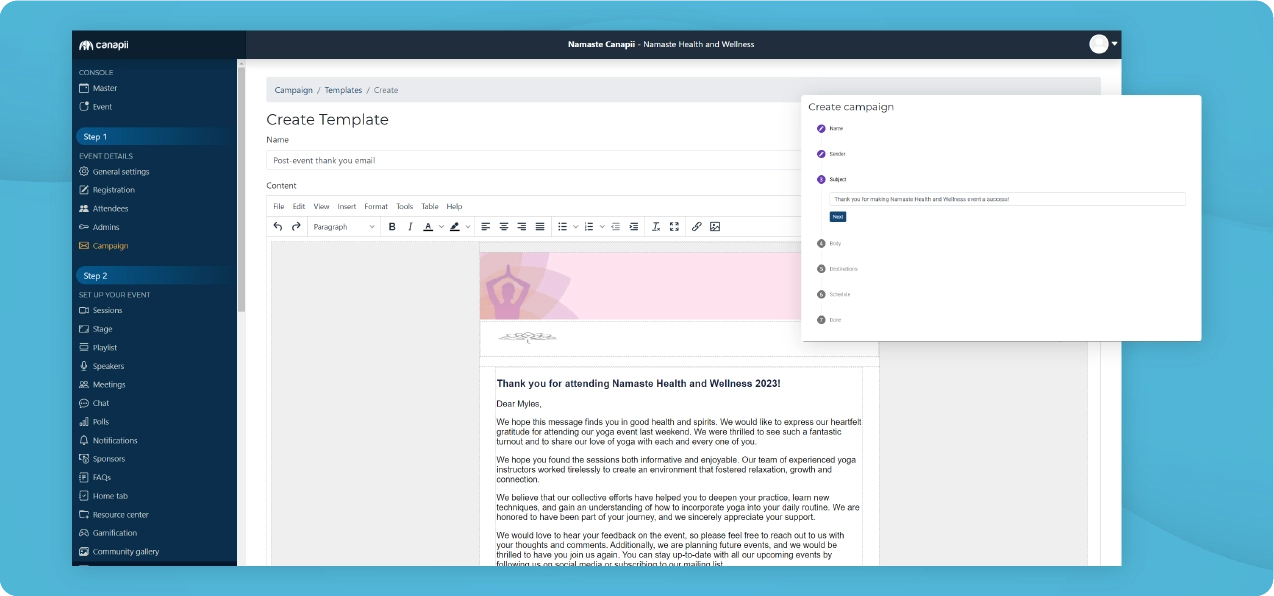
A lengthy subject line gets cut off on mobile devices, causing confusion or disinterest. Stick to 4-7 words or no more than 40 characters, while making sure the line still reflects the content of your thank you email and captures the recipient’s attention.
The only way to know which subject line performs best is ongoing experimentation. A/B testing, also known as split testing, means creating multiple variations of a subject line and measuring which one produces the best results.
Once the subject line has done its job, the body needs to deliver: a personal greeting, genuine thanks, a few highlights, a feedback request and a pointer to what’s next.
Decide whether a formal or informal greeting suits the relationship. When in doubt, “Dear” works for formal messages, while “Hello/hi”, “Greetings” or “Good morning/afternoon” suit informal ones. Adding the recipient’s name personalizes the email - just double-check the spelling before sending.
Aim for a conversational yet positive tone - not overly friendly, not excessively curt. A few witty lines can work if they fit your brand. Add your event branding to the email, and encourage attendees to follow you on social media for future event updates.
The first sentence sets the tone for the whole email and can decide whether the recipient keeps reading. Express genuine gratitude for their attendance, contribution, presentation or any other service they provided during the event, and stay courteous and sincere.
Briefly mentioning memorable moments or standout speakers adds a personal touch. You can share photos or videos too, but stay mindful of the email’s length - the focus should remain on gratitude and the recipient’s part in the event’s success.
Have a pre-designed template ready so your thank you goes out immediately after the event, while the experience is still fresh - the ideal moment to ask for feedback and suggestions. An event platform like Canapii lets you create a survey form tailored to your requirements, and offering a prize draw to respondents can lift completion rates.
Close with brief details of other events you’re organizing, including a website link where readers can find more information and register. Sharing this is an easy way to boost attendance at whatever comes next.
A recognizable one. An unfamiliar sender name can make recipients mistake your message for spam, and a “no-reply” address makes a thank you feel robotic and unappreciated - and stops people from replying at all.
GDPR requires extra care when emailing people and handling their personal data. Only email attendees who have given their consent to receive messages from you, and use BCC to keep recipients’ email addresses private. If you intend to use their data to shape future email campaigns, you must tell them - and provide the option to unsubscribe from your mailing list.

Here is a professional sample you can adapt after your next successful event:
Dear Myles,
We wanted to express our gratitude for your attendance at the Namaste Health and Wellness Expo! We had an outstanding turnout this year, welcoming a remarkable 720 attendees to our annual expo. In addition, we hosted 12 breakout sessions with industry experts and raised more than $20,000 to continue partnering with local nonprofits.
To stay updated on our future events and initiatives, we invite you to follow us on Facebook and Instagram (@namasteexpo).
Once again, thank you for your support and participation in the Namaste Health and Wellness Expo. We look forward to seeing you at our future events and to continuing to motivate you to take care of your health and wellbeing.
We hope to see you soon!
Best,
Namaste Event Team
As soon as possible after the event ends, while the experience is still fresh in attendees’ minds. Preparing a template in advance means it can go out immediately.
Attendees first - but speakers, sponsors and stakeholders all gave their time or support, and a tailored thank you strengthens those relationships too.
Around 4-7 words, or no more than 40 characters, so it displays fully on mobile devices while still reflecting what the email is about.
Yes - it’s one of the best moments to do so. Include a link to a short survey form, and consider a prize draw to encourage responses.
Under GDPR, yes. Only contact people who have agreed to receive emails, keep addresses private with BCC, and always offer a way to unsubscribe.
Canapii’s event platform lets you effortlessly build and send email campaigns to attendees while securely managing ticket sales and attendee information - across in-person, virtual and hybrid events. Reach out to learn more and schedule a demo.