
Resources
Blog
Insights on events, technology, and the future of gathering
Latest articles
Insights on events, technology, and the future of gathering
Quick answer: An event app is a mobile app built for one specific event. Attendees download it to view schedules, maps, and speaker details, connect with other guests, and join polls, quizzes, and Q&A sessions. Organizers use it to share updates at scale, boost engagement, attract sponsors, and capture event analytics.
Organizing an event is no simple task - could event apps change that? From small meetings to international conferences and trade shows, an event’s success hinges on information and data. Well-informed attendees are more engaged, and organizers who know how their attendees engage can use that insight to improve every event they run.
Great results don’t start at the end of an event - the stage is set during planning. An event app is a big part of that phase and keeps working for you long after the show is over. Here’s what you need to know.

An event app is a mobile app dedicated to a single event, downloaded from the app store on your Apple or Android device just like any other app. When attendees open it, they find features relevant to that event, such as:
A map of the event facilities
Event schedules
Speaker and presenter information
Event content such as videos, polls, and quizzes
Gamification features
The app is completely custom to your event - you can include your logo, fonts, and other branding elements to give it a native feel. Ultimately, the goal of an event app is to improve the attendee experience, which helps hosts generate more revenue and better event outcomes.
Organizers create an app that’s specific to their event and publish it to the app store. Attendees download it and use it throughout the event to find information, content, and people.
Every event app is a little different because it’s tailored to a specific event, but most share common functions. Attendees can view the schedule, build their own itineraries, and set reminders for sessions they don’t want to miss. They can connect with presenters or other attendees who share their interests, making networking that much easier.
Most event apps also send push notifications about special moments or upcoming sessions, and hosts can upload content throughout the event - from video recaps to full sessions on demand. For hybrid audiences, the app acts as a hub that keeps in-person and remote attendees equally connected: everyone can tune into sessions, join Q&As and polls, view event content, and network from the same place.

Event apps vary in features, depending on who developed the app and what the event hosts want. If you’re new to event apps and want to explore the potential, the following features are worth some thought:
A live feed on the app’s home screen “broadcasts” the event’s happenings, showing content from hosts, speakers, and even attendees - think of it as your event’s own social timeline. Feeds keep attendees informed and encourage them to contribute to conversations and upload their own event content, which you can reuse in future marketing.
Push your event app content to platforms such as Facebook, Twitter, or Instagram to give your event wider exposure and make sure you’re properly tagged in every post.
In-app networking makes it easy to form new connections. Attendees upload a photo so people can put a name and face together, strike up one-on-one conversations, or join group discussions. Apps that use AI can even play matchmaker, suggesting people from similar backgrounds, roles, or locations.
Engagement is a critical piece of your event’s success, and polls let attendees take part with a single tap. Share the results on the spot or announce them later - and run a different poll for each day of the event, or even for each session.
Interactive quizzes boost engagement around specific sessions or the event as a whole. For instance, if attendees have lots of session options, a quiz can help them find where to best spend their time.
A Q&A feature lets everyone participate, not just the people in the room. Remote attendees or those in another session can submit questions ahead of time or after the session is over, or simply follow what other attendees are asking.
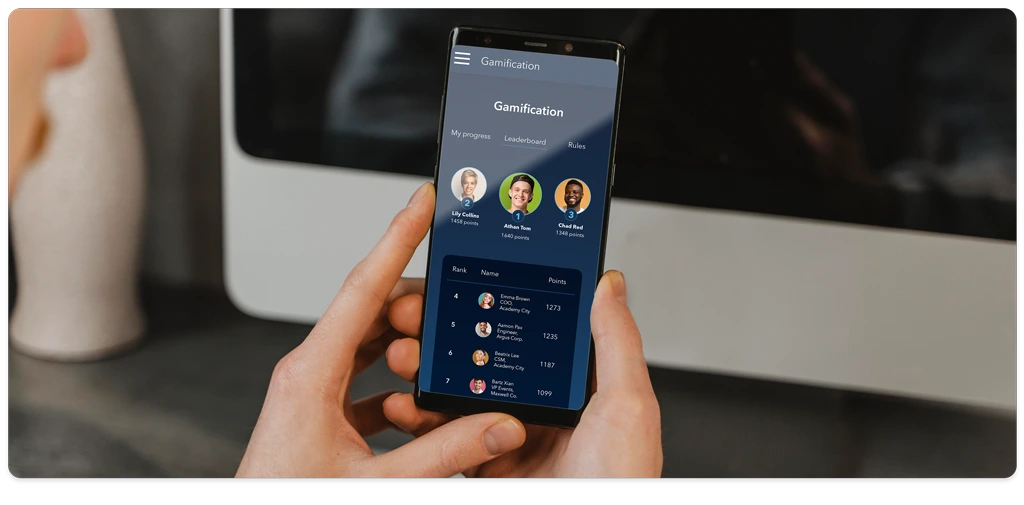
Gamification features turn your event into a friendly competition. Attendees collect points for actions such as checking in to certain areas, visiting vendors, or attending sessions, then redeem them for prizes, discounts, or special event privileges.
Wayfinding contributes to your event’s success: if attendees can’t find sessions, exhibitors, or other event components, they won’t engage to their potential. An interactive map gives them a bird’s-eye view of the event from their phones and lets them bookmark the places that matter to them.
A schedule of sessions and happenings shows attendees who’s on stage, what time things start, and where. Some event apps let users create custom itineraries, add sessions to their calendar app, and set alerts before a session begins so they don’t miss a minute.
Just like your website, event apps have a content management system - your interface for uploading images, videos, documents, and more, keeping everything in one place.
Ready-made event apps like Canapii make it easy to infuse your own brand with themes and templates. It’s easier than building an event app from the ground up - and faster, too.
For international audiences, event apps offer multiple languages so users can navigate the event in a way that suits them. There’s no translating on your part, either - the app handles the translation so attendees get the most from their experience.
Push notifications are messages that appear on a user’s device, letting organizers share important details, announcements, or reminders at scale.
Live chat sparks conversations between attendees, presenters, and brands before, during, and after sessions. Combined with social media integrations, it can drastically improve networking and event exposure.
Sponsors expect exposure at events. An in-app directory helps them get seen, and each listing can link to the sponsor’s website or a special landing page, increasing the value of every sponsorship.
Let attendees upgrade their event pass, buy branded items, order lunch or premium refreshments, or book one-on-one meetings with presenters. Monetizing your event app can help cover the cost of the app itself.
For traveling audiences, a city guide shares points of interest such as nearby attractions, public transportation, and restaurants and hotels within walking distance - and it can even earn sponsorships.
Post-event marketing is your last chance to make an impression and gather feedback. Send attendees a quick survey through the app while the experience is still fresh.
Engagement collected through the app becomes essential analytics. See at a glance your most engaged attendees, the features that made an impact, and the content that resonated - then use these insights to improve your shortcomings and build on your successes.
Engagement is the driving force behind an event app, but what does that mean in the grand scheme of things? Unpacking it reveals several distinct benefits:
Why did your guests decide to attend? What do they want to get out of it? How can you meet their expectations? The content attendees engage with in the app gives you clues into their priorities, challenges, and reasons for attending - insight you can’t get from a headcount alone.
With mobile wallets and payment apps on the rise, attendees are no strangers to purchasing from their smartphones. Branded event gear, experience upgrades, and vendor purchases through the app create additional revenue streams that can make your events more profitable than ever.
Exposure is one of the main reasons brands sponsor events, and the more you can offer, the more valuable the sponsorship becomes. An event app increases the value of a sponsorship: sponsors appear in the directory, attendees engage with them directly, and sponsors can track that engagement with special links or codes.
An event app gets your information into everyone’s hands effortlessly and reduces spending on printed materials whose purpose ends when the event does. Digital copies of your content stay available for guests to refer back to again and again.
In the past, organizers could only rely on metrics like registrations, check-ins, and revenue, gauging sentiment and engagement by eye. Event apps collect engagement data at scale - and you keep that data to compare event performance over time.
In general, the more complex your event, the more sense an app makes. It’s an ideal solution for multi-day events, events that span several locations, or high-profile events with lots of sessions and big-name speakers.
If you’re adding a virtual element, an event app helps unify the experience: remote users tune in via the app and gain many of the same advantages as attending in person. And if you have ways to monetize the app, it becomes even easier to justify the investment.
We’d be doing you a disservice if we didn’t share the full picture. First, an event app is something else you’ll need to promote - the app isn’t useful if people don’t download and use it, so build it into your event marketing and make it easy to access.
Second, app performance often depends on a strong internet connection. If you’re hosting in an area where cellular service is weak, make sure the venue offers Wi-Fi your guests can access.
Finally, there’s development. Creating an app doesn’t happen overnight: it’s another line item in your budget, and someone needs to oversee its development and testing. None of these are deal breakers, but they’re worth weighing to make your app investment worthwhile.
There are two paths to creating an event app. The first is to make it yourself with a mobile app developer, built from the ground up to your specifications. It will be completely custom to you, but that can make it harder to repurpose - if you host different types of events for various audiences, your app might not work for all occasions.
The other option is ready-made infrastructure that offers the best of both worlds: customization and done-for-you technology. Canapii puts a turnkey event app in your hands with purpose-built features for in-person, virtual, and hybrid events - from Q&As and polls to interactive content - so it’s never been easier to create a wow-worthy event experience.
Yes - attendees download the app from their device’s app store, just like any other app. Promote the app alongside the event itself and make it easy to access so people install it before day one.
Absolutely. For hybrid audiences, the app serves as a hub that keeps in-person and remote attendees connected - everyone can tune into sessions, join Q&As and polls, view event content, and network from the same place.
Through in-app purchases such as pass upgrades, branded merchandise, refreshment orders, and bookable one-on-one meetings, plus more valuable sponsorship packages built around in-app directories and trackable sponsor exposure.
Engagement analytics: your most engaged attendees, the features that made an impact, and the content that resonated with your audience. Because the data is digital, you can keep it and compare performance across events over time.
Not always. The more complex the event - multi-day, multi-location, or session-heavy - the stronger the case for an app. A simple single-track meeting may not need one.
Canapii’s turnkey event app has powered 2,000+ events across 45+ countries since 2020, keeping attendees tuned in and connected at in-person, virtual, and hybrid shows alike. Contact us today for a free demo and let us help you transform your next event.