
Resources
Blog
Insights on events, technology, and the future of gathering
Latest articles
Insights on events, technology, and the future of gathering
Quick answer: Most virtual events work best at two to four hours, and no single day should run longer than five. Webinars rarely need more than 45 minutes, panel discussions an hour, and educational sessions 30 to 45 minutes, while day-long conferences fare better split into three to four hour blocks with breaks.
Best day: Mondays and Fridays attract the most engaged audiences
Best start time: early afternoon, between 1:00 pm and 3:30 pm
Format matters: webinars, lectures, conferences and panels all have different sweet spots
Manage longer events with multiple days, interactivity and parallel sessions
A hybrid approach can serve both online and in-person audiences
Virtual events became all the rage in the events industry following the Covid-19 pandemic. By replicating the look and feel of a traditional event in the digital sphere, companies can reap many benefits by hosting virtual events – but maximising attendance takes a solid strategy behind your event’s timing and duration.
Virtual events remove the physical logistics of a venue, travel and accommodation, but that does not mean yours should run without preparation or structure. This guide covers the best day, start time and runtime for your online event, so you can maximise attendance and give attendees the best possible experience.
Statistically, Mondays and Fridays work best for virtual event dates. They fall when working professionals start or finish their week, so with fewer midweek distractions or commitments, attendees are likely to be more engaged with your content.
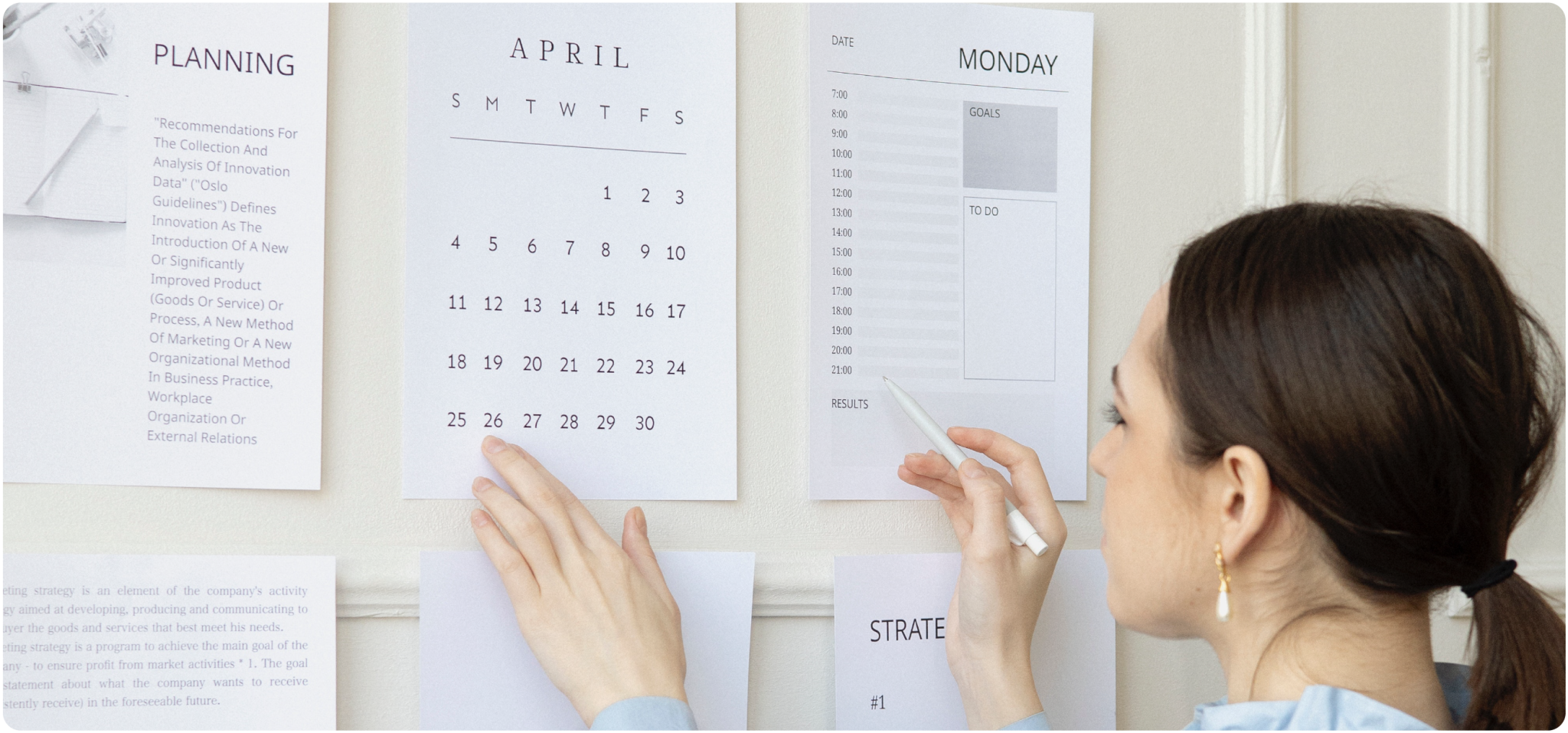
Hosting on a Tuesday, Wednesday or Thursday runs the risk of lower engagement and attendance, as it breaks up the working week and many people may be less inclined to commit. That said, midweek days have worked well for plenty of events – treat this as a factor to weigh rather than gospel.
Online events that start in the early afternoon, between 1:00 pm and 3:30 pm, tend to capitalise on both attendance and engagement. This window avoids the lower turnout common in the mornings and leaves attendees enough time to grab lunch.
If you are catering to international attendees across time zones, you may benefit from streaming your event or providing on-demand access so people can watch when it suits them.
We recommend your virtual event run no longer than five hours in a day, with two to four hours the ideal duration – depending, of course, on your content. In a digital setting people are more sedentary and more prone to distraction, so keeping within these parameters helps you achieve maximum engagement and attendance while minimising dips in your online audience’s attention span.
If you do insist on running all-day online events, expect regular dips at certain times throughout the day – specifically mid-morning, lunchtime, mid-afternoon and early evening.
The right duration largely depends on the type of event, and each session should be scheduled to ensure maximum audience engagement across the day. Recommended durations are also getting shorter each year – attention spans are notoriously short online, so what worked in the past will not necessarily work today.
Webinars are a great way for businesses to connect with their target audience, and while they often used to run for several hours, the typical webinar now rarely surpasses 45 minutes. Most include an activity that requires participation, such as a Q&A session, to keep the audience paying attention.
Short courses and online lectures have become instrumental educational and skill-learning resources, regularly used by tutors, lecturers and business coaches. Single lectures benefit from being no more than 30 or 45 minutes, ideally with a collaborative activity or discussion towards the end.
Organising online conferences that span a whole day requires far more preparation – it would be unwise to assume attendees will stay in front of their screens all day without a comfort break.
You might fare better breaking the day into two larger chunks – a morning portion and an evening portion – with neither exceeding three or four hours, and adding pre-recorded content so your audience can take a breather and come back without missing out. The key is to experiment with different timing and structure combinations to see which works best for your type of online event.
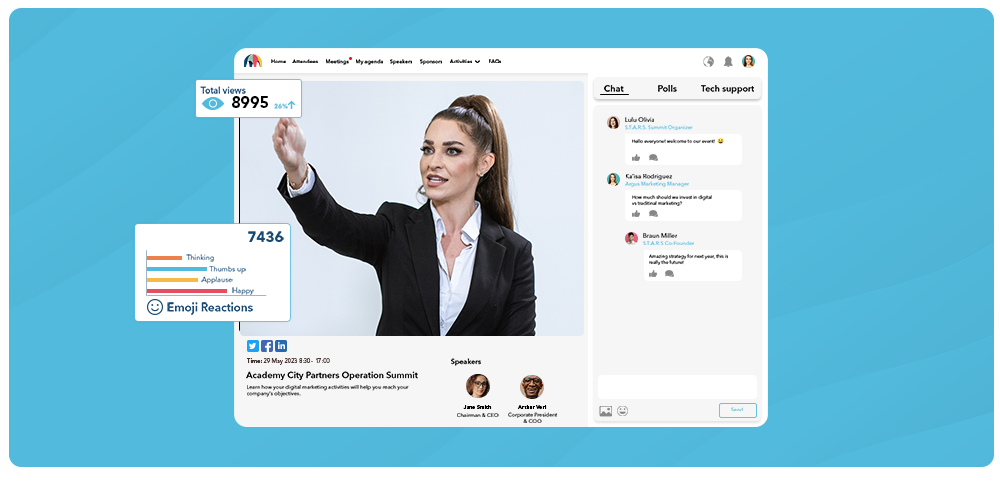
Multi-day virtual events require even more organisation than single-day ones. Many companies are adopting a hybrid approach to annual events, but for a purely virtual one, spreading the content across an entire week can maximise audience interaction and alleviate many engagement issues. Including some pre-recorded material also goes a long way for those who cannot attend every session.
Panel discussions with multiple speakers rarely need to run longer than an hour, with or without a Q&A portion. If you have a handful of panels, spread the sessions out rather than shoehorning every discussion into one, so each can cater to its most interested audience niche.
Beyond picking the right runtime, a few structural choices help longer events hold attention.
A single day chock-full of content is sure to divide opinion and fatigue audiences. Splitting your event across two or more days makes each date feel more important and compelling, and gives attendees more control over what they engage with – more flexibility is always better than less.
Interactivity is key to driving engagement at virtual events. Involve your attendees as much as possible so the event feels less formulaic – remember they are often confined to one room for hours of the day, so make it feel worth their time and attention.
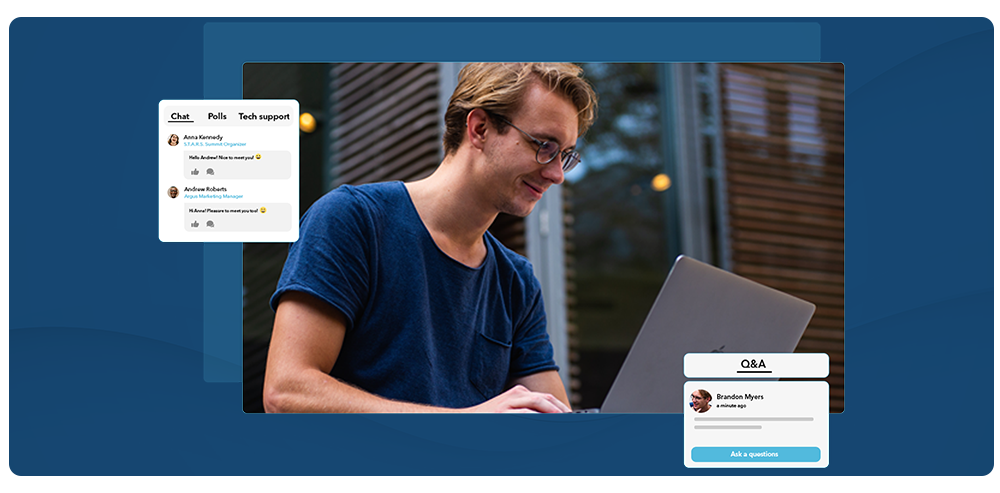
This could be in the form of:
Live chats
Breakout rooms
Networking sessions
Discussions
Group activities
Research
Votes or polls
Feedback
Forums
Invitations for questions
Elevator pitches
A general audience can be segmented, and you can structure your event’s sessions to cater to each segment separately. For example, a business coach could deliver a webinar for sole traders at the same time as a keynote speaker addresses corporate marketing directors – there is unlikely to be a huge crossover. Providing a clear schedule so the audience can decide which session is most relevant helps significantly.
Structure also matters for the content of your event. While the material will largely be constructed by your participating speakers or guests, providing some input can have mutually beneficial results. A keynote speech might dominate a 45-minute session, for instance, but perhaps a quarter of it could be spent on other activities such as networking, tasks or research, which would be the remit of the audience.
While online events cannot recreate the in-person, face-to-face experience 100% of the time, hybrid events provide a healthy blend of both. Many working professionals love balancing face-to-face and remote working, and the same can now be done with events. With Canapii’s event platform – used for 2,000+ events across 45+ countries since 2020 – you can seamlessly cater to online and in-person audiences alike.
Two to four hours is ideal, and no single day should run longer than five. Online audiences are more prone to distraction than in-person ones, so shorter, well-structured events hold attention better.
Mondays and Fridays tend to draw the most engaged audiences, and an early-afternoon start between 1:00 pm and 3:30 pm capitalises on both attendance and engagement. For international audiences, on-demand access helps bridge time zones.
A typical webinar now rarely surpasses 45 minutes, usually including a participatory element such as a Q&A session to keep the audience engaged.
Split the event across multiple days, break each day into blocks of three to four hours at most, add pre-recorded content people can catch up on, and use interactive features such as live chats, polls and breakout rooms.
Not necessarily. Spreading a multi-day event across an entire week can maximise audience interaction, and pre-recorded material helps those who cannot attend every session.
Whatever duration you land on, Canapii helps you schedule sessions, stream content on demand and keep audiences engaged from start to finish. Contact us for a demonstration and we will help you set it up.